2

  • Sr
0
Site logo
Sticky header logo
Site logo
0
  • Sr
  • Home
  • Products
    • Pressure Gauges
    • Thermometers
    • Valves and Diaphragm Seals
    • Pressure and Level Transmitters
    • Electromagnetic Flowmeters
    • Level Switches
    • Temperature Transmitters and Sensors
    • Digital Indicators
    • Hydraulic Hoses
    • Industrial Hoses
    • Hydraulic Fittings
  • Services
  • About us
    • Certificates
  • Laboratory
  • Blog
  • Contact

Electromagnetic Flowmeters

Electromagnetic flowmeters measure the flow of conductive liquids with no moving parts and no pressure loss in the pipeline, which makes them the standard for water, wastewater, acids, alkalis, paints and pastes. As an authorised distributor of measurement and control equipment, Fadip offers the PEM-500 and PEM-1000 electromagnetic flowmeters for pipelines from DN 10 to DN 1000, with bidirectional measurement, 0.5% accuracy (down to 0.2%) and 4-20 mA, pulse, frequency and Modbus RTU outputs. We also supply the APIS electropneumatic positioner with HART protocol for precise control valve positioning.

Catalogue: download the Fadip catalogue (PDF) with technical data on flowmeters and positioners.

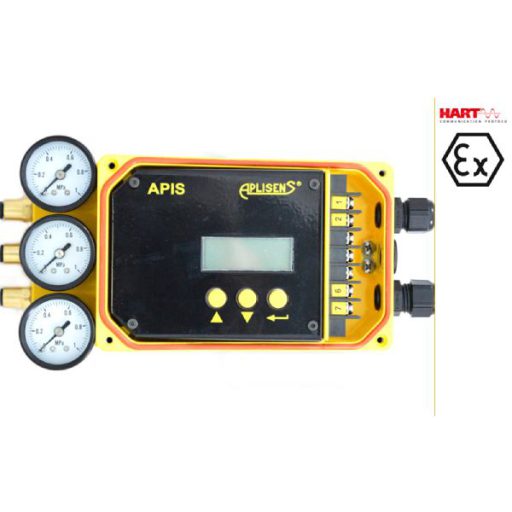
Flowmeter Electropneumatic positioner APIS

Electropneumatic positioner APIS

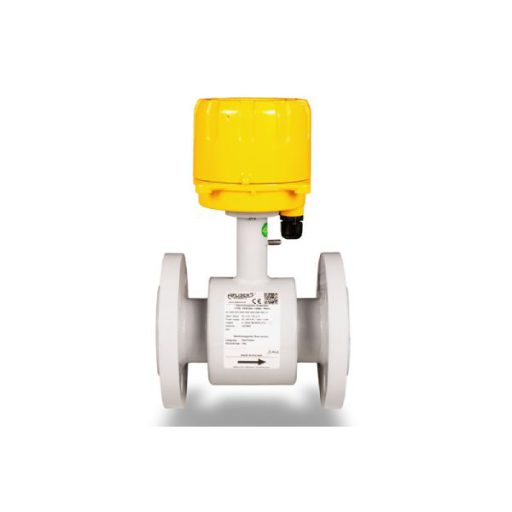
Flowmeter Electromagnetic flowmeter PEM-500

Electromagnetic flowmeter PEM-500

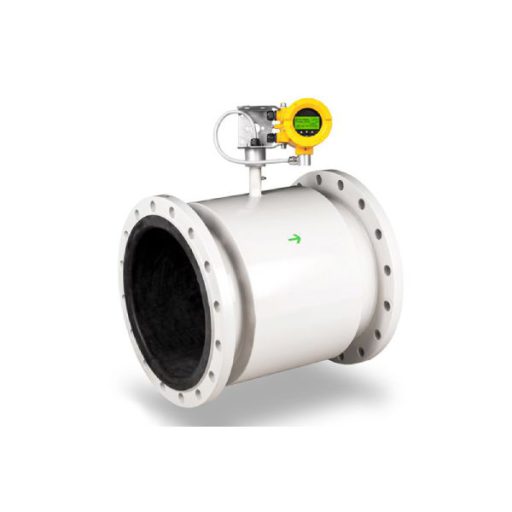
Flowmeter Electromagnetic flowmeter PEM-1000

Electromagnetic flowmeter PEM-1000

SEARCH

How to choose right pressure gauge?

PRODUCTS

  • Pressure Gauges
  • Thermometers
  • Valves and Diaphragm Seals
  • Hydraulic Hoses
  • Industrial Hoses
  • Hydraulic Fittings
  • Pressure and Level Transmitters
  • Level Switches
  • Electromagnetic Flowmeters
  • Temperature Transmitters and Sensors
  • Digital Indicators

DOWNLOAD CATALOG

What is a flowmeter and what is it used for

A flowmeter measures the quantity of liquid passing through a pipeline per unit of time, usually in m³/h or l/s, and totalises the volume that has passed. Flow data is the basis for dosing, consumption billing, pump control and leak detection, so flowmeters are found in water supply, treatment plants, the chemical and food industries and power generation.

How an electromagnetic flowmeter works

An electromagnetic flowmeter works on Faraday's law of induction. Coils in the sensor create a magnetic field across the pipe, and a conductive liquid flowing through this field induces a voltage proportional to its velocity. Electrodes pass this voltage to the transmitter, which converts it into flow. Because there are no moving parts or restrictions in the pipe, measurement causes no pressure loss, nothing wears out, and accuracy does not depend on the density, viscosity or temperature of the medium. The only requirement is a minimum conductivity of 5 µS/cm.

Products in the Fadip range

The PEM-500 electromagnetic flowmeter covers pipelines from DN 10 to DN 300 (ANSI 1/2" to 12"), with 0.5% accuracy, for static pressures of 16, 25 or 40 bar. The PEM-1000 goes up to DN 1000 (ANSI 40"), with 0.5% or 0.2% accuracy and pressures up to 16 bar. Both models measure bidirectionally, have DIN or ANSI flanged connections and IP67/IP68 protection, so the sensor can also operate submerged in a chamber.

The APIS electropneumatic positioner moves a control valve to the exact position according to a 4-20 mA + HART signal, for linear strokes from 10 to 900 mm and rotary actuators up to 180°. Accuracy is 0.15% or 0.25%, the housing is stainless or galvanised steel, protection IP54/IP67, with an ATEX version for hazardous areas.

How to choose a flowmeter

The nominal size is chosen according to the flow rate, not just the existing pipe diameter: the optimum liquid velocity is 1 to 3 m/s, so for low flows a smaller flowmeter with reducers is often installed. The medium must be conductive (water, wastewater, acids, alkalis, milk, juices, pastes) and also determines the liner and electrode materials. The pressure and temperature of the medium (up to 90 °C) determine the flange rating, and the output signal (4-20 mA, pulse, frequency, Modbus RTU/RS485) the connection to the control system. Accurate measurement requires straight pipe runs upstream and downstream of the sensor and a completely full pipe.

Applications

Electromagnetic flowmeters are used in water supply and boreholes to measure water delivered, in wastewater treatment plants, in the chemical industry for acids, alkalis and dosing, in the food industry for milk, juices and pastes, and in the paint industry. APIS positioners work on control valves in district heating plants, refineries and process plants.

Complete measurement equipment in one place

Alongside flowmeters we offer pressure and level transmitters, digital indicators and pressure gauges from our own production, with technical support throughout.

For a quotation, send us the medium, minimum, normal and maximum flow, pipe diameter, pressure, temperature and required output signal. Our technical team will recommend a suitable solution within 24 hours. Contact us.

Flowmeter FAQ

How does an electromagnetic flowmeter work?

A magnetic field passes through the pipe, and the conductive liquid flowing through it induces a voltage proportional to its velocity (Faraday's law). Electrodes pass the voltage to the transmitter, which converts it into flow. There are no moving parts in the pipe, so there is no wear and no pressure loss.

Which liquids is an electromagnetic flowmeter suitable for?

All liquids with a conductivity of at least 5 µS/cm: water, wastewater, acids, alkalis, paints, pastes, milk and juices. It is not suitable for petroleum products, oils, demineralised water or gases, as these are not electrically conductive.

Which flowmeter size should I choose?

Choose the size so that the liquid velocity at normal flow is between 1 and 3 m/s. If the flow is low relative to the pipe diameter, a smaller flowmeter with reducers is used. The PEM-500 covers DN 10 to DN 300 and the PEM-1000 DN 10 to DN 1000.

Does an electromagnetic flowmeter measure flow in both directions?

Yes. The PEM-500 and PEM-1000 measure bidirectionally and totalise the flow in each direction separately. See the PEM-500 flowmeter.

How should a flowmeter be installed?

Install the sensor so that the pipe is always completely full of liquid, preferably on a rising section. Provide a straight run of at least 5 pipe diameters upstream and at least 3 diameters downstream, with no valves, bends or pumps in the immediate vicinity.

What is an electropneumatic positioner used for?

A positioner receives a 4-20 mA control signal and pneumatically moves the control valve to the exact set position, with feedback on the actual position. This gives precise control of flow, pressure or temperature. See the APIS positioner.

Image module

Fadip – Merna Tehnika is the only Serbian manufacturer of pressure and temperature gauges, with an accredited calibration laboratory. Since 1987, we’ve been delivering reliable, high-quality measurement solutions, with custom options tailored to meet each client’s specific needs.

Links

  • Home
  • About us
  • Services
  • Certificates
  • Laboratory

Links

  • How to choose right pressure gauge?
  • Products
  • Blog
  • Contact

Contact us
  • Facebook
  • +381 (0)21 69 10 103
  • office@fadip.rs
  • Petrovoselski put br.2, 21220 Bečej
© Fadip Bečej – manometri i termometri.
div#stuning-header .dfd-stuning-header-bg-container {background-image: url(https://fadip.rs/wp-content/uploads/2025/07/fadip-bg-page.jpg);background-size: cover;background-position: top center;background-attachment: initial;background-repeat: initial;}#stuning-header div.page-title-inner {min-height: 350px;}#main-content .dfd-content-wrap {margin: -10px;} #main-content .dfd-content-wrap > article {padding: 10px;}@media only screen and (min-width: 1101px) {#layout.dfd-portfolio-loop > .row.full-width > .blog-section.no-sidebars,#layout.dfd-gallery-loop > .row.full-width > .blog-section.no-sidebars {padding: 0 20px;}#layout.dfd-portfolio-loop > .row.full-width > .blog-section.no-sidebars > #main-content > .dfd-content-wrap:first-child,#layout.dfd-gallery-loop > .row.full-width > .blog-section.no-sidebars > #main-content > .dfd-content-wrap:first-child {border-top: 20px solid transparent; border-bottom: 10px solid transparent;}#layout.dfd-portfolio-loop > .row.full-width #right-sidebar,#layout.dfd-gallery-loop > .row.full-width #right-sidebar {padding-top: 10px;padding-bottom: 10px;}#layout.dfd-portfolio-loop > .row.full-width > .blog-section.no-sidebars .sort-panel,#layout.dfd-gallery-loop > .row.full-width > .blog-section.no-sidebars .sort-panel {margin-left: -20px;margin-right: -20px;}}#layout .dfd-content-wrap.layout-side-image,#layout > .row.full-width .dfd-content-wrap.layout-side-image {margin-left: 0;margin-right: 0;}