2

  • Sr
0
Site logo
Sticky header logo
Site logo
0
  • Sr
  • Home
  • Products
    • Pressure Gauges
    • Thermometers
    • Valves and Diaphragm Seals
    • Pressure and Level Transmitters
    • Electromagnetic Flowmeters
    • Level Switches
    • Temperature Transmitters and Sensors
    • Digital Indicators
    • Hydraulic Hoses
    • Industrial Hoses
    • Hydraulic Fittings
  • Services
  • About us
    • Certificates
  • Laboratory
  • Blog
  • Contact

Thermometers

Fadip of Bečej is the only manufacturer of pressure gauges and thermometers in Serbia. Since 1987 we have been making industrial thermometers to EN 13190: bimetal thermometers with 63 to 160 mm dials for temperatures from -20 to +400 °C, in steel and all stainless steel versions, and glass thermometers in brass cases. We also supply capillary thermometers and thermo-manometers for heating, resistance thermometers, thermocouples up to 1600 °C and thermowells, and we calibrate bimetal and glass thermometers in our accredited laboratory.

Thermometer catalogue: download the Fadip catalogue (PDF) with technical specifications, measuring ranges, dial sizes, accuracy classes and connections.

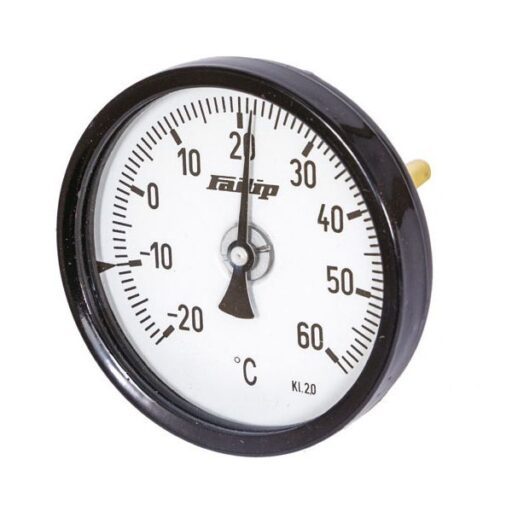
Thermometers Bimetal thermometers

Bimetal thermometers

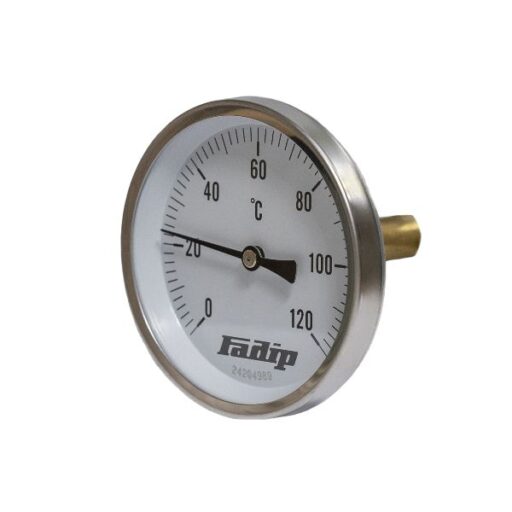
Thermometers Bimetal thermometers for hot water

Bimetal thermometers for hot water

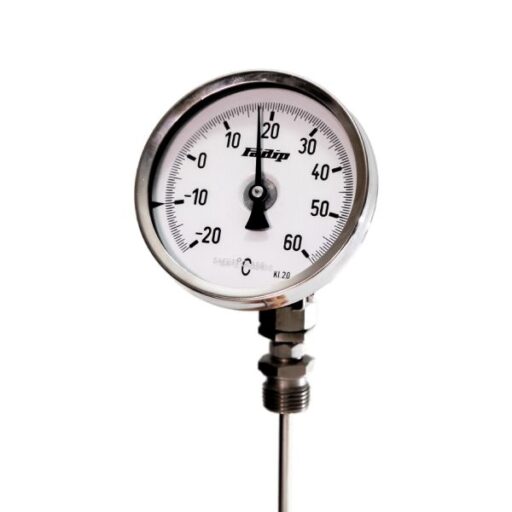
Thermometers Bimetal thermometers – stainless steel

Bimetal thermometers – stainless steel

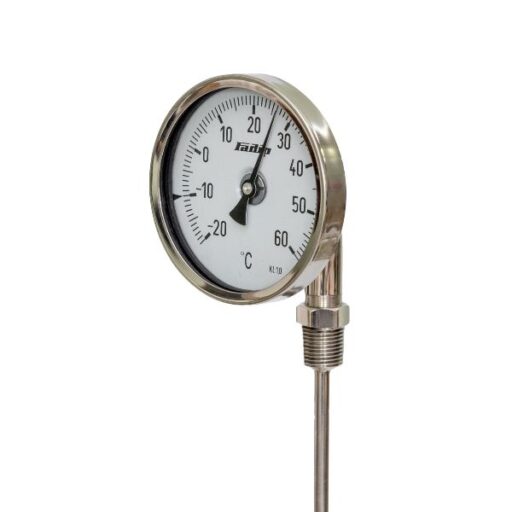
Thermometers Bimetal thermometers adjustable – stainless steel

Bimetal thermometers adjustable – stainless steel

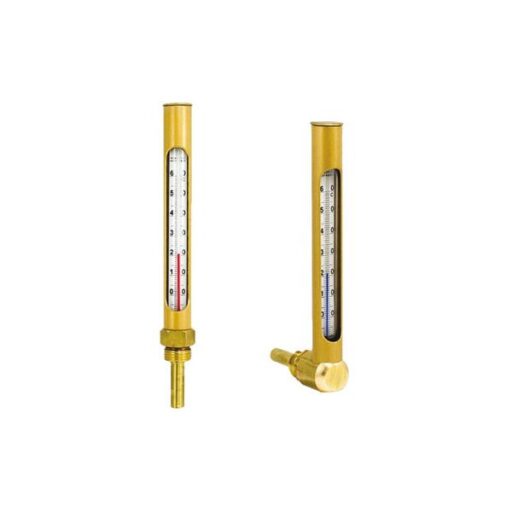
Thermometers Industrial glass thermometers

Industrial glass thermometers

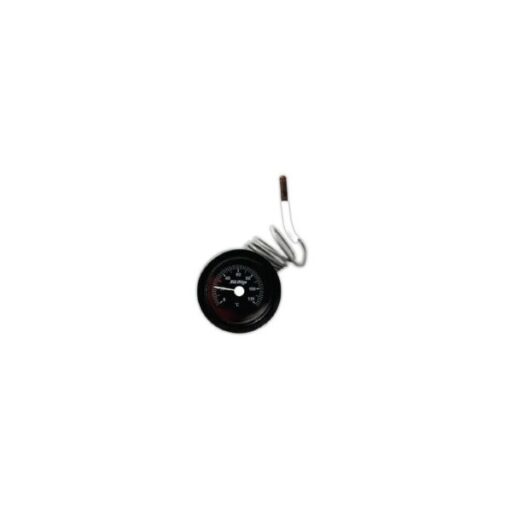
Thermometers Capillary bimetall thermometer

Capillary bimetall thermometer

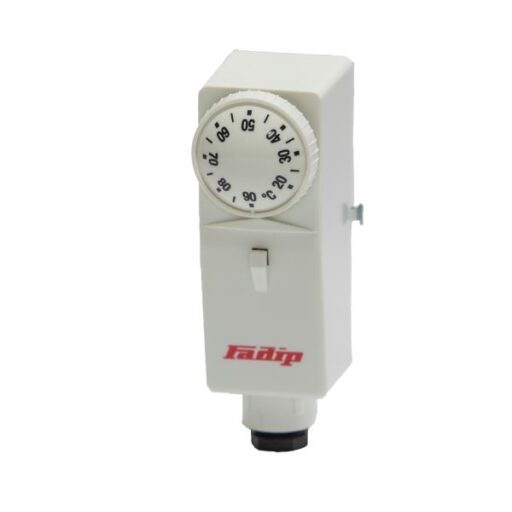
Thermometers Pipe thermostat

Pipe thermostat

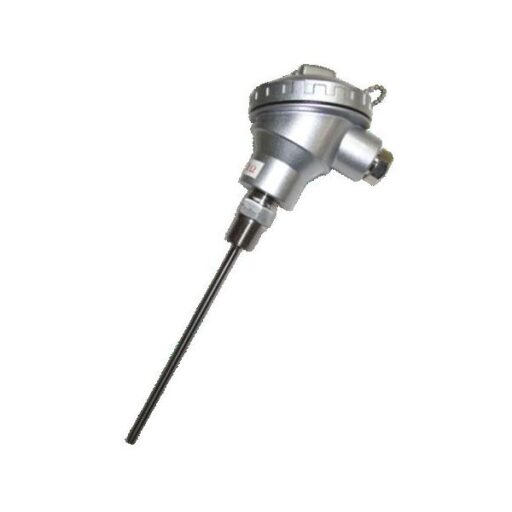
Thermometers Resistance thermometer

Resistance thermometer

Prev

Posts navigation

  • 1
  • 2
Next

SEARCH

How to choose right pressure gauge?

PRODUCTS

  • Pressure Gauges
  • Thermometers
  • Valves and Diaphragm Seals
  • Hydraulic Hoses
  • Industrial Hoses
  • Hydraulic Fittings
  • Pressure and Level Transmitters
  • Level Switches
  • Electromagnetic Flowmeters
  • Temperature Transmitters and Sensors
  • Digital Indicators

DOWNLOAD CATALOG

What is a thermometer and what is it used for

A thermometer is an instrument that shows the temperature of a liquid, gas, steam or surface. In industry and heating, temperature is, alongside pressure, the most important process parameter: it governs the safety of boilers and heat exchangers, product quality in the food and chemical industries and energy consumption in heating systems. Analogue thermometers are read directly on site and need no power supply, while electrical sensors (resistance thermometers and thermocouples) send a signal to the control system.

How industrial thermometers work

A bimetal thermometer has a measuring coil made of two metal strips with different coefficients of thermal expansion. When the temperature changes, the coil twists and turns the pointer directly, with no transmission mechanism, which makes the instrument robust and reliable. A glass thermometer works on the expansion of liquid in a capillary and offers high accuracy and long-term stability. A resistance thermometer measures the change in electrical resistance of a metal sensor with temperature, and a thermocouple measures the voltage generated at the junction of two dissimilar conductors, which is why it covers the highest temperatures, up to 1600 °C.

Types of thermometers in the Fadip range

Standard bimetal thermometers (TBAS back entry and TBRS bottom entry) have a black powder coated steel case and are designed for non-aggressive fluids under pressure.

All stainless bimetal thermometers (TBAN, TBRN) and every-angle stainless thermometers (TBZG), whose case can be rotated to the best reading position, are designed for aggressive media and aggressive environments.

Bimetal thermometers for heating (TBAS KT1S with brass pocket), capillary thermometers and thermo-manometers, which show temperature and pressure on a single dial, cover boilers, hot water cylinders and heat substations.

Glass thermometers in brass cases measure from -40 to +400 °C with accuracy class 1.0, while resistance thermometers and thermocouples provide an electrical signal for automation. For pipe surface temperature without cutting into the installation, use a clamp-on pipe thermostat.

How to choose a thermometer

Five parameters need to be defined. The measuring range should be chosen so that the working temperature falls in the middle third of the scale, where accuracy is highest and the instrument is not constantly running at its limit.

The dial size (63, 80, 100 or 160 mm) depends on the reading distance, and the connection position (back entry, bottom entry or every-angle) on the installation point.

The stem length and diameter (Ø6, Ø8, Ø10 or Ø12 mm) must ensure that the tip of the stem sits in the flow of the medium rather than in a dead zone near the pipe wall. The medium and pressure determine the material (steel or stainless steel) and whether a thermowell is needed, which also allows the thermometer to be replaced without draining the installation.

Technical specifications

Bimetal thermometers are made to EN 13190 with 80, 100 and 160 mm dials, in accuracy classes 1.0 and 2.0, for ranges from -20 to +400 °C and working pressures up to 40 bar without a thermowell (60 bar on request). The connection is fixed or sliding (adjustable), in brass or stainless steel, with the thread to order. The heating version comes with 63, 80 and 100 mm dials, class 2.5, for -20 to +120 °C and pressures up to 6 bar with a pocket and G1/2" connection. Resistance thermometers and thermocouples have an aluminium connection head and a G1/2, G3/4 or M20x1.5 thread, and resistance thermometers work at pressures up to 20 bar in ranges up to 400 °C.

Thermometer applications by industry

In heating and heat substations, thermometers and thermo-manometers monitor flow and return temperatures, boilers and hot water cylinders. The food, pharmaceutical and chemical industries use all stainless bimetal thermometers on reactors, pasteurisers and pipelines. Power generation, refineries and boiler making require thermometers with thermowells for steam and high pressures, while thermocouples are used in furnaces, on exhaust gases and in metallurgy. Resistance thermometers are the standard in automation, HVAC systems and cold stores, where an electrical signal is needed.

Thermometer calibration and servicing

Fadip operates a laboratory accredited by the Accreditation Body of Serbia to SRPS ISO/IEC 17025:2017, including temperature instruments. The scope covers liquid-in-glass thermometers and bimetal thermometers, so we issue calibration certificates for new and existing instruments. The recommended interval is 12 months, and more often for instruments exposed to vibration, thermal shock or used in safety functions.

Why buy from a manufacturer

As a manufacturer, Fadip supplies standard thermometers from stock and adapts the stem length, dial size, range, connection and material to the customer's requirements at short notice. Calibration and servicing are carried out in-house.

Alongside thermometers we offer pressure gauges, temperature transmitters and sensors for systems with an electronic signal, and digital indicators.

For a quotation, send us the measuring range, medium, pressure, dial size, stem length and connection. Our technical team will recommend a suitable thermometer within 24 hours. Contact us.

Thermometer FAQ

How does a bimetal thermometer work?

A bimetal thermometer has a measuring coil made of two bonded metal strips with different coefficients of thermal expansion. As the temperature rises the coil twists and turns the pointer directly. There is no transmission mechanism, so the instrument is resistant to vibration and reliable in industrial conditions.

What is the difference between back entry, bottom entry and every-angle thermometers?

On a back entry (axial) thermometer the stem comes out of the back of the case, so it is used when the installation point faces the observer, for example on a tank wall or a pipe bend. On a bottom entry (radial) thermometer the stem comes out of the bottom, which suits vertical pipes. An every-angle thermometer has an adjustable case that can be rotated to the best reading position.

Which measuring range should I choose?

The working temperature should be in the middle third of the scale. Typical ranges are 0 to 120 °C for heating, 0 to 160 °C or 0 to 250 °C for process industry, and up to 400 °C for steam and thermal plants. Above 400 °C, thermocouples are used.

How long should the thermometer stem be?

The tip of the stem must sit in the flow of the medium. For pipes, the stem usually reaches the pipe axis or at most two thirds of the pipe diameter. Standard stem diameters are Ø6, Ø8, Ø10 and Ø12 mm, and we make the length to the customer's requirements.

When is a thermowell needed?

A thermowell protects the stem from pressure, flow and aggressive media and allows the thermometer to be replaced without draining the installation. It is mandatory with high pressures, high flow velocities, steam and aggressive media. See our thermowells.

What does the accuracy class of a thermometer mean?

The accuracy class is the maximum permissible error expressed as a percentage of the measuring range. A class 1.0 thermometer with a 0 to 120 °C range may deviate by no more than ±1.2 °C. Fadip makes bimetal thermometers in classes 1.0 and 2.0, and heating versions in class 2.5.

When should an all stainless thermometer be used?

An all stainless thermometer has a case, stem and connection made of stainless steel. It is used for aggressive media, in the food, pharmaceutical and chemical industries and for outdoor installation in corrosive environments. See our all stainless bimetal thermometers.

What is a thermo-manometer?

A thermo-manometer shows water temperature and pressure simultaneously on a single dial. It is most often fitted to boilers and heat substations. Fadip makes 80 mm thermo-manometers for 0 to 4 bar and 0 to 120 °C. See our thermo-manometers.

What is the difference between a resistance thermometer and a thermocouple?

A resistance thermometer measures the change in electrical resistance of the sensor and offers higher accuracy and stability in ranges up to about 400 °C. A thermocouple measures the voltage at the junction of two dissimilar metals, responds faster and covers temperatures up to 1600 °C, with somewhat lower accuracy. See our resistance thermometers and thermocouples.

How often should a thermometer be calibrated?

The recommended interval is 12 months for instruments in normal use, and more often with vibration, thermal shock and safety functions. The Fadip laboratory is accredited for calibrating liquid-in-glass and bimetal thermometers and issues calibration certificates.

How should a thermometer be installed?

Tighten the thermometer using a spanner on the hexagon of the connection, never by turning the case. The stem should be immersed in the medium along its full active length, ideally against the direction of flow. With high pressures and aggressive media, the thermometer is fitted in a thermowell.

Does Fadip make thermometers to customer specification?

Yes. As a manufacturer we adapt the stem length and diameter, measuring range, dial size, connection position and thread, and material. Lead times depend on the design and quantity.

Image module

Fadip – Merna Tehnika is the only Serbian manufacturer of pressure and temperature gauges, with an accredited calibration laboratory. Since 1987, we’ve been delivering reliable, high-quality measurement solutions, with custom options tailored to meet each client’s specific needs.

Links

  • Home
  • About us
  • Services
  • Certificates
  • Laboratory

Links

  • How to choose right pressure gauge?
  • Products
  • Blog
  • Contact

Contact us
  • Facebook
  • +381 (0)21 69 10 103
  • office@fadip.rs
  • Petrovoselski put br.2, 21220 Bečej
© Fadip Bečej – manometri i termometri.
div#stuning-header .dfd-stuning-header-bg-container {background-image: url(https://fadip.rs/wp-content/uploads/2025/07/fadip-bg-page.jpg);background-size: cover;background-position: top center;background-attachment: initial;background-repeat: initial;}#stuning-header div.page-title-inner {min-height: 350px;}#main-content .dfd-content-wrap {margin: -10px;} #main-content .dfd-content-wrap > article {padding: 10px;}@media only screen and (min-width: 1101px) {#layout.dfd-portfolio-loop > .row.full-width > .blog-section.no-sidebars,#layout.dfd-gallery-loop > .row.full-width > .blog-section.no-sidebars {padding: 0 20px;}#layout.dfd-portfolio-loop > .row.full-width > .blog-section.no-sidebars > #main-content > .dfd-content-wrap:first-child,#layout.dfd-gallery-loop > .row.full-width > .blog-section.no-sidebars > #main-content > .dfd-content-wrap:first-child {border-top: 20px solid transparent; border-bottom: 10px solid transparent;}#layout.dfd-portfolio-loop > .row.full-width #right-sidebar,#layout.dfd-gallery-loop > .row.full-width #right-sidebar {padding-top: 10px;padding-bottom: 10px;}#layout.dfd-portfolio-loop > .row.full-width > .blog-section.no-sidebars .sort-panel,#layout.dfd-gallery-loop > .row.full-width > .blog-section.no-sidebars .sort-panel {margin-left: -20px;margin-right: -20px;}}#layout .dfd-content-wrap.layout-side-image,#layout > .row.full-width .dfd-content-wrap.layout-side-image {margin-left: 0;margin-right: 0;}