2

  • Sr
0
Site logo
Sticky header logo
Site logo
0
  • Sr
  • Home
  • Products
    • Pressure Gauges
    • Thermometers
    • Valves and Diaphragm Seals
    • Pressure and Level Transmitters
    • Electromagnetic Flowmeters
    • Level Switches
    • Temperature Transmitters and Sensors
    • Digital Indicators
    • Hydraulic Hoses
    • Industrial Hoses
    • Hydraulic Fittings
  • Services
  • About us
    • Certificates
  • Laboratory
  • Blog
  • Contact

Hydraulic Fittings

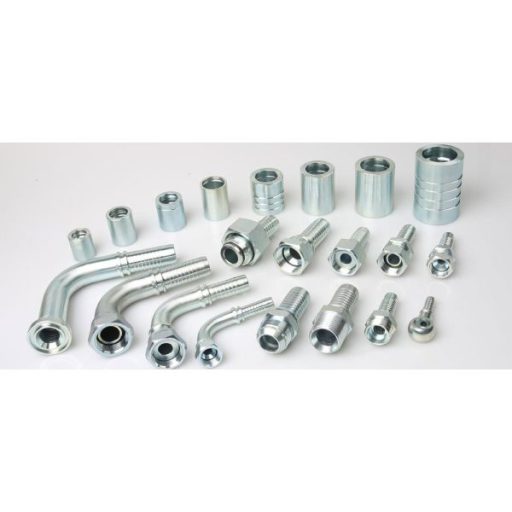
Hydraulic fittings connect a hose to a pump, valve, cylinder or pipeline and must withstand the same pressure as the hose itself. Fadip’s production range includes fittings and ferrules for low, high and very high pressure, in shapes A to P, sizes DN6 to DN50, straight and bent at 45° and 90°, in zinc-plated steel, brass and stainless steel. In addition to the standard shapes, we make adapters, couplings and fittings to the customer’s specification.

Catalogue: download the Fadip catalogue (PDF) with technical data on hydraulic fittings.

Hydraulic Fittings Hydraulic fittings

Hydraulic fittings

SEARCH

How to choose right pressure gauge?

PRODUCTS

  • Pressure Gauges
  • Thermometers
  • Valves and Diaphragm Seals
  • Hydraulic Hoses
  • Industrial Hoses
  • Hydraulic Fittings
  • Pressure and Level Transmitters
  • Level Switches
  • Electromagnetic Flowmeters
  • Temperature Transmitters and Sensors
  • Digital Indicators

DOWNLOAD CATALOG

Types of hydraulic fittings by shape

The shape of a fitting determines the sealing method and thread. Our production range includes hydraulic fittings in the following shapes: A ball nose with M and G thread, B banjo, C flat face with M, G and UN thread, D cone with M and UNF thread, G straight threaded with M, G and NPT thread, H threaded cone with G thread, J threaded with M thread, K threaded cone with M and UNF thread, M tapered with M thread and P flanged.

Sizes, orientation and material

Fittings are made for hoses from DN6 to DN50 (DN6, DN8, DN10, DN13, DN16, DN20, DN25, DN32, DN40 and DN50), in straight versions and bent at 45° and 90°, which makes routing hoses easier without bending them too tightly. Materials are zinc-plated steel for standard hydraulics, brass for water, air and lower pressures, and stainless steel for aggressive media, the food industry and outdoor installation. We also make matching ferrules for low, high and very high pressure.

How to choose a hydraulic fitting

The fitting must match the hose (nominal diameter and hose type, for example 1SN, 2SN or 4SP, because of the ferrule), the thread and sealing method at the installation point (metric, BSP, NPT, UNF, cone, ball nose or with a seal) and the working pressure of the system. The most common mistake is confusing similar threads, such as metric and UNF, or different cone angles, which leads to leaks and damage. If in doubt, send us a sample or measure the outside diameter and pitch of the thread.

Made to order

As a manufacturer, in addition to the standard range Fadip makes adapters, couplings and fittings to the customer's specification, for non-standard threads, thread combinations, special lengths and materials. This is particularly useful when maintaining older and imported machinery for which original parts are unavailable or have long lead times.

Applications

Hydraulic fittings are used on agricultural and construction machinery, hydraulic power units and presses, in shipbuilding, mining and industrial maintenance. See also our EN 853, EN 856 and SAE 100 hydraulic hoses, industrial hoses and glycerine filled pressure gauges for pressure monitoring in hydraulics.

For a quotation, send us the fitting shape, thread, nominal diameter and hose type, working pressure, material and quantity, and for special designs a drawing or sample. Our technical team will recommend a suitable solution within 24 hours. Contact us.

Hydraulic fitting FAQ

Which hydraulic fitting shapes does Fadip make?

We make fittings in shapes A (ball nose), B (banjo), C (flat face), D (cone), G, H, J and K (threaded), M (tapered) and P (flanged), with metric, G, UN, UNF and NPT threads. See our hydraulic fittings.

Which hose sizes are the fittings available for?

Fittings and ferrules are made for hoses from DN6 to DN50, i.e. 6.4 to 50.8 mm inside diameter, for low, high and very high pressure.

When is a bent fitting used?

Fittings bent at 45° or 90° are used when a straight fitting would require the hose to be bent below its minimum bend radius. This extends hose life and reduces the space needed for installation.

Which fitting material should I choose?

Zinc-plated steel is the standard for hydraulics with mineral oil. Brass is used for water, air and lower pressures, and stainless steel for aggressive media, the food industry and outdoor installation in corrosive environments.

Does Fadip make fittings from a sample or drawing?

Yes. In addition to the standard range, we make adapters, couplings and fittings to the customer's requirements, from a drawing or sample, including non-standard threads and thread combinations.

How do I identify the thread on a hydraulic fitting?

Measure the outside diameter of the thread and its pitch (threads per inch or distance in millimetres) and check the shape of the sealing surface (cone, ball nose, flat with seal). If in doubt, send us a sample or a photograph with dimensions and we will identify the thread.

Image module

Fadip – Merna Tehnika is the only Serbian manufacturer of pressure and temperature gauges, with an accredited calibration laboratory. Since 1987, we’ve been delivering reliable, high-quality measurement solutions, with custom options tailored to meet each client’s specific needs.

Links

  • Home
  • About us
  • Services
  • Certificates
  • Laboratory

Links

  • How to choose right pressure gauge?
  • Products
  • Blog
  • Contact

Contact us
  • Facebook
  • +381 (0)21 69 10 103
  • office@fadip.rs
  • Petrovoselski put br.2, 21220 Bečej
© Fadip Bečej – manometri i termometri.
div#stuning-header .dfd-stuning-header-bg-container {background-image: url(https://fadip.rs/wp-content/uploads/2025/07/fadip-bg-page.jpg);background-size: cover;background-position: top center;background-attachment: initial;background-repeat: initial;}#stuning-header div.page-title-inner {min-height: 350px;}#main-content .dfd-content-wrap {margin: -10px;} #main-content .dfd-content-wrap > article {padding: 10px;}@media only screen and (min-width: 1101px) {#layout.dfd-portfolio-loop > .row.full-width > .blog-section.no-sidebars,#layout.dfd-gallery-loop > .row.full-width > .blog-section.no-sidebars {padding: 0 20px;}#layout.dfd-portfolio-loop > .row.full-width > .blog-section.no-sidebars > #main-content > .dfd-content-wrap:first-child,#layout.dfd-gallery-loop > .row.full-width > .blog-section.no-sidebars > #main-content > .dfd-content-wrap:first-child {border-top: 20px solid transparent; border-bottom: 10px solid transparent;}#layout.dfd-portfolio-loop > .row.full-width #right-sidebar,#layout.dfd-gallery-loop > .row.full-width #right-sidebar {padding-top: 10px;padding-bottom: 10px;}#layout.dfd-portfolio-loop > .row.full-width > .blog-section.no-sidebars .sort-panel,#layout.dfd-gallery-loop > .row.full-width > .blog-section.no-sidebars .sort-panel {margin-left: -20px;margin-right: -20px;}}#layout .dfd-content-wrap.layout-side-image,#layout > .row.full-width .dfd-content-wrap.layout-side-image {margin-left: 0;margin-right: 0;}